Military Service, Financial Crisis and Adapting to Civilian Life: A Retired Sergeant's Story
After serving his country for a quarter of a century, Adilet Suleimenov retired at the age of 45, never expecting that civilian life would present him with entirely different challenges.
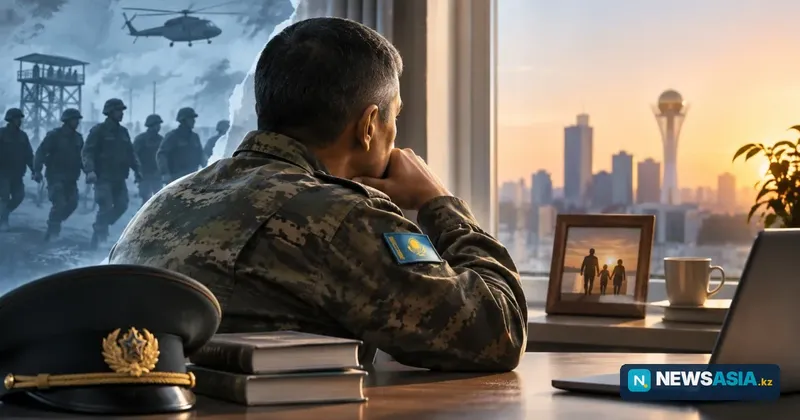
After serving his country for a quarter of a century, Adilet Suleimenov retired at the age of 45, never expecting that civilian life would present him with entirely different challenges, NewsAsia.kz reports, citing Aikyn.kz. Today, working as an educational psychologist and basic military training instructor at a rural college in the Akmola region, he spoke candidly in an interview with the Azattyq Rýhy portal about the stagnation he faced after taking off his uniform, his struggle with debt, and the difficulties of readjusting to a new environment.
Military retiree and Sergeant Second Class Adilet Suleimenov dedicated 26 years of his life to the armed forces. He began his military career as a private and gunner-operator in an air assault brigade stationed in Taldykorgan. Later, in 2011, he transferred to the 36th Air Assault Brigade in Astana, serving as a company sergeant. In 2012, he was among those who helped establish a special forces counter-terrorism battalion formed within the brigade, serving as its battalion sergeant for five years. From 2018, he worked as the first assistant to the commander of a logistics base at a military unit in the capital, before officially retiring in 2022 at age 45.
'You become just one of the crowd'
For someone who lived by strict military discipline for a quarter of a century, blending into civilian society proved difficult. Daily life in a garrison bears little resemblance to civilian realities.
"There were hardships after retirement. We entered the military base before dawn and left after dark. We were given tasks and trained to execute them. We did not make many decisions on our own, nor did we produce anything with our hands; our focus was solely on combat operations, tactics, and shooting drills. We marched in formation everywhere. Concepts like taking shortcuts or finding an easy way out, as people do in civilian life, simply did not exist," he recalled.
According to him, stepping outside the world of strict rules and orders leaves a person feeling vulnerable and isolated. Many service members are unprepared for this psychological shock.
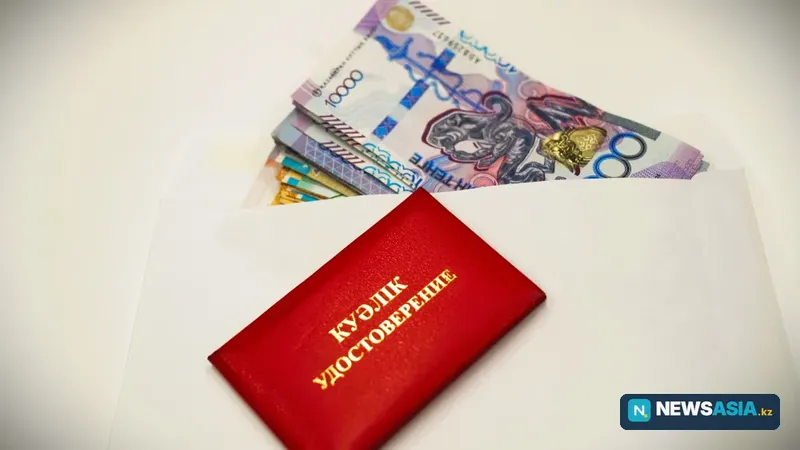
"About 99 percent of those who stand in formation thinking they will easily adapt to civilian life and handle everything fail. They see you off from the base, hand you a certificate of appreciation and a souvenir. The door closes. You are on your own. That is it; in civilian life, whether you were a general, a colonel, or a commander's first assistant means nothing to other people. You become just one of the crowd. Someone else takes your post. The door shuts. From then on, integrating into society is entirely up to you," he said.
'I lost enough money to buy an entire herd of horses'
Before leaving the service, Suleimenov did not sit idly by; he tried to plan ahead, save money, and prepare himself mentally. However, the realities of the market and business were entirely different.
"In 2023, I decided to take up livestock farming and set up a ranch in the Burabay district. Unfortunately, I could not make the business work. It required a lot of practical experience. What we saw in childhood cannot be compared to modern realities. I struggled for about two years, but it did not pan out. I lost enough money to buy an entire herd of horses and fell into debt. In the end, I had to shut the business down," the former sergeant admitted.
Having lost his savings and feeling demoralized, he was forced to return to the capital. To make ends meet, he took a job as a security guard at a foreign ambassador's residence. During that period, he learned through social media about the "neSPI" (Post-Military Integration Community) foundation, established on the initiative of his former colleague, Colonel Rustem Zhantenov.
"Once I realized that the project he launched was meaningful, I came here. Renovation work was underway at the time. I showed up and helped carry out trash for a couple of days," he said.
Before long, this step gave his life fresh momentum. Because his primary educational background was in educational psychology, the foundation offered him a position in 2024 as a basic military training instructor at School No. 25 in Astana. After working there for an academic year, despite limited classroom equipment and facilities, he took pupils on tours of military bases, involved them in oath-taking ceremonies, and built close ties with patriotic organizations. Today, he teaches and mentors youth at a college in the village of Zhanaesil in the Tselinograd district of the Akmola region.
'People leaving military life desperately need psychological support'
In Suleimenov's view, service members transitioning to civilian life urgently need specialized support centers and psychological assistance. Otherwise, despair and internal stress can drag a person down.
"When someone turns 45 and suddenly finds themselves cut off from the military environment, the thought comes: 'I am the most useless person in the world.' On the surface, you are still young, yet you are already a pensioner. Then, when a person is left alone, all kinds of frightening thoughts enter their head. Not everyone can cope with them. Many men seek relief in alcohol. Once you drink, everything seems fine, and the body gradually gets used to it," the veteran explained.
He cited an example where the foundation located a former senior military officer in Petropavl, admitted him to a treatment facility, and helped him return to normal life. In his view, branches should also open in regions with harsh winters and heavy military concentrations, such as Oskemen. Some veterans, unable to handle civilian stress, give in to anger, resort to violence, and end up behind bars.
"We need organizations that act as a bridge and handle integration, like the public foundation 'Post-Military Integration Community'... From then on, integrating into society is entirely in your own hands," Suleimenov concluded.
Comments
No comments yet. Be the first.