Government to allocate 22 billion tenge to raise veterinarians' salaries
Kazakhstan is allocating 22 billion tenge to boost salaries for veterinary specialists amid staff shortages and an expanding laboratory network.

Kazakhstan has earmarked 22 billion tenge to increase the salaries of veterinary specialists. This was announced by Taskyn Kyzaibayev, Deputy Chairman of the Committee for Veterinary Control and Surveillance under the Ministry of Agriculture of the Republic of Kazakhstan, business information center NewsAsia.kz reports, citing 24.kz.
According to the official, the current average monthly income of sector employees stands at around 220,000 tenge, but under the funding review, it is planned to raise it to 420,000 tenge. The industry currently faces a shortage of more than 700 specialists. Additional support measures are planned to encourage recruitment: the current monthly supplement for holding a Candidate of Sciences degree is set at 73,000 tenge, and 147,000 tenge for a Doctor of Sciences, while a one-time allowance exceeding 4 million tenge is under development.
At the same time, the diagnostic infrastructure of the agricultural sector is expanding. The country operates a network of 185 laboratories, with about 60 more units scheduled for launch. Preventive monitoring covers around 70 animal diseases: diagnostic procedures are implemented for 25 of them, and routine immunization is carried out for 22. Kazakhstan holds six trade statuses, including official recognition by the World Organisation for Animal Health as a zone free from foot-and-mouth disease with vaccination. Risks of avian influenza, African swine fever, and equine infections remain under continuous control.
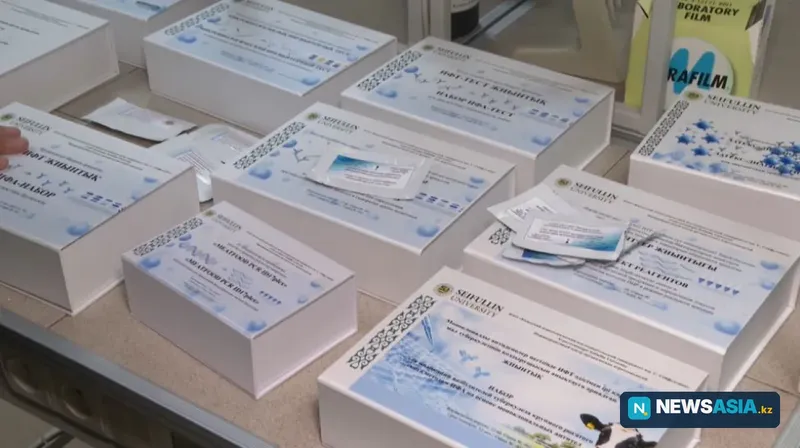
In terms of food safety standards, new incoming raw material testing tools are being introduced. The Institute of Animal Science and Veterinary Medicine at S. Seifullin Kazakh Agrotechnical University has developed test strips capable of detecting antibiotic residues in milk and meat within 15 minutes. According to Orken Akibekov, director of the institute, the test result is indicated by the appearance of two lines on the test paper.
The research center has also developed the MetaFood PCR reagent kit to verify the authenticity of meat products. The innovation differentiates the DNA of 17 biological species, making it possible to quickly detect raw material adulteration and foreign additives, including pork in halal and sausage products.


Comments
No comments yet. Be the first.