Threat of 605 Million Ton CO2 Release: Scientists Propose Reflooding Aral Sea Bed
Spanish researchers have proposed partially restoring the Aral Sea to prevent massive carbon dioxide emissions caused by its desiccation, NewsAsia.kz reports, citing Zakon.kz.

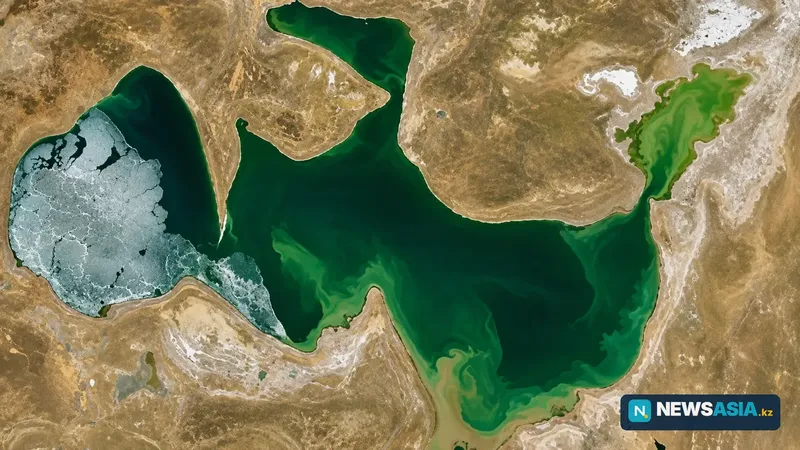
Spanish researchers have proposed partially restoring the Aral Sea to prevent massive carbon dioxide emissions caused by its desiccation, NewsAsia.kz reports, citing Zakon.kz.
According to a scientific study published in the journal Science, since the water began receding in the 1960s, the dried riverbeds and seabed have already released hundreds of millions of tons of carbon into the atmosphere. Researchers calculated that reflooding select areas could prevent the release of another 605 million tons of CO₂. However, implementing the project would require colossal investments running into billions of euros.
Experts explained that the idea involves covering specific areas of the former seabed with water to cut off oxygen to bottom sediments, thereby preventing the accelerated decomposition of organic matter. At the same time, the researchers do not aim to restore the lake to its former historical boundaries, as such a project is virtually unfeasible due to the immense scale of land loss and the region's acute need for water resources.
The proposed approach focuses on identifying the most vulnerable areas where flooding would have the greatest impact on curbing emissions. According to the foreign publication EcologíaVerde, the move goes beyond simple ecosystem restoration and could serve as a new tool in the fight against climate change.

Comments
No comments yet. Be the first.