Stroke, Cancer and Brain Damage: Health Ministry Details AI Adoption in Kazakhstan Hospitals
More than 700 medical facilities in Kazakhstan are using over 10 artificial intelligence solutions for disease diagnosis and paperwork handling.
More than ten artificial intelligence solutions have been introduced across more than 700 medical organizations in Kazakhstan, the Ministry of Healthcare of the Republic of Kazakhstan said, NewsAsia.kz reports, citing El.kz and Kazinform.
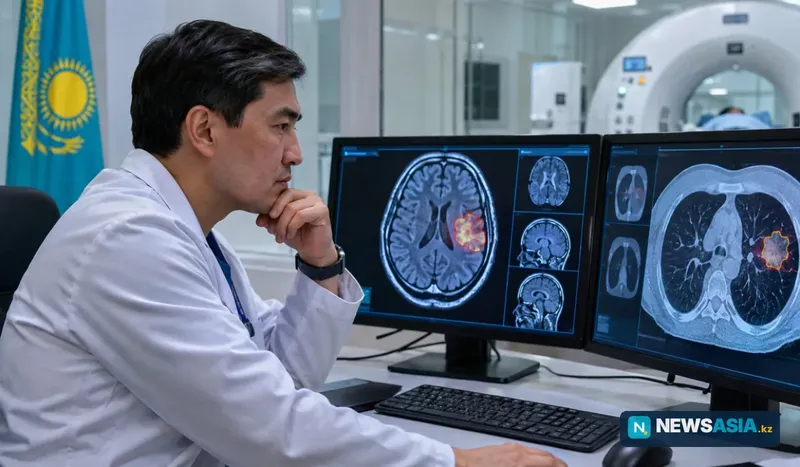
The technologies are used to analyze medical images, detect signs of severe pathologies, and speed up documentation. According to the ministry, stroke diagnosis has become one of the key areas. The specialized CerebraAI system analyzes CT scan data and assists specialists in detecting signs of brain damage. Currently, the solution is deployed in 17 stroke centers across Astana, as well as the Akmola, Zhambyl, Almaty, Mangystau, and Jetisu regions.
As the ministry noted, since September 1, 2025, CerebraAI algorithms have analyzed examination results of over 23,500 patients with suspected stroke. The ministry emphasized that prompt recognition of the condition enables faster initiation of treatment.
In addition, artificial intelligence is utilized to detect signs of breast and lung cancer, and is also applied in dentistry. The software processes images and assists specialists during examinations, but the final decision regarding diagnosis and treatment tactics remains with the healthcare professional.
Beyond diagnostics, digital tools aim to reduce routine paperwork. According to the ministry, 4,205 doctors are already using the digital assistant Alima. As part of a pilot project, documentation during an appointment with a patient having an uncomplicated condition took an average of one and a half minutes instead of six. The Health Ministry explained that such services are intended to free up staff time for interacting with patients, stressing that artificial intelligence serves only as a supporting tool and does not replace humans.

Comments
No comments yet. Be the first.