Pallor, Bradycardia, and Unconsciousness: ENT Surgeon Warns of Nasal Drop Risks in Children
Kazakh ENT surgeon Sergey Ilyinsky warned of the dangers of children being poisoned by vasoconstrictor nasal drops, NewsAsia.kz reports, citing Tengrinews.kz.

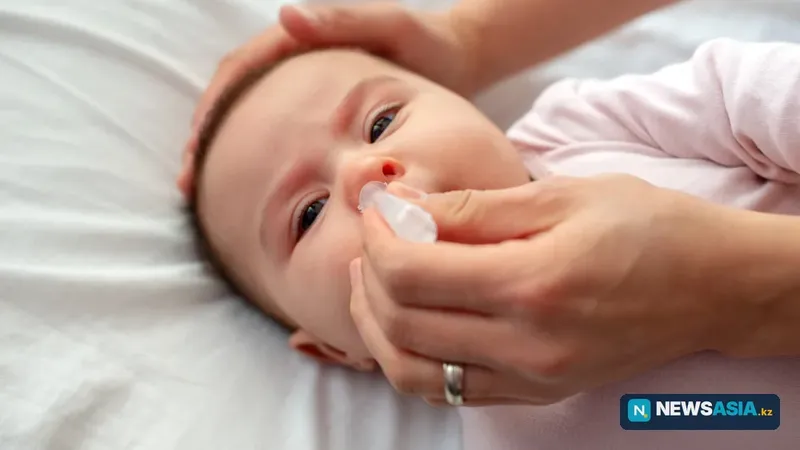
ENT surgeon Sergey Ilyinsky, a candidate of medical sciences with 30 years of experience, explained the risks of nasal drug poisoning in minors following a wave of stories shared by parents on social media, NewsAsia.kz reports, citing Tengrinews.kz.
The concern was prompted by reports from mothers whose young children were admitted to intensive care units. In one case, a mother mixed up the solutions and administered an adult medication to her four-month-old child, after which he fell into a deep sleep:
"He slept deeply for three hours and then just didn't wake up. An ambulance, intensive care, two days with no guarantees. I was beside myself. It was the scariest thing that has ever happened to me in my entire life. My son survived. He is healthy. But I feel as if I aged 60 years"
.
The specialist confirmed that intoxication from drops intended for adults is recorded quite often, and a child does not even need to drink the medication to end up in severe condition.
"Sometimes, simply administering adult vasoconstrictor nasal drops not intended for their age into a child's nose is enough to trigger such a reaction,"
, the ENT surgeon explained.
The doctor added that the severity of the consequences depends on individual characteristics, age, and dosage:
"Some children will not even feel that adult drops were administered to them, and it might seem completely harmless. Others, on the contrary, can react very severely"
.
Such medications belong to the class of adrenomimetics and cause an immediate vascular spasm through the mucous membranes.
"One could say that by taking the drops, the child ingested adrenaline in a certain concentration. It is absorbed through the mucous membranes of the nose or mouth and can cause a sharp vascular spasm, leading to such adverse consequences,"
, Sergey Ilyinsky noted.
The physician listed the typical signs of poisoning: pale skin, cold and clammy sweat, a drop in blood pressure, a slow or fast heart rate (bradycardia or tachycardia), confusion, lethargy in the limbs, and excessive drowsiness where the child cannot be woken up.
If the formulation is accidentally swallowed, an ambulance must be called immediately, and warm fluids should be given right away to reduce the concentration of the toxin in the stomach. According to the expert, giving fluids is effective only within the first two hours, before the medication enters the bloodstream. In addition, the doctor stressed that pediatric formulations of nasal drops can also trigger a similar reaction in cases of individual sensitivity or ingestion.


Comments
No comments yet. Be the first.