How employers in Kazakhstan can legally monitor workplace communications and video
Yernar Zhyngylbayev, an attorney with the Almaty City Bar Association, has clarified the legal framework governing workplace correspondence monitoring and video surveillance, NewsAsia.kz reports, citing Tengrinews.kz.

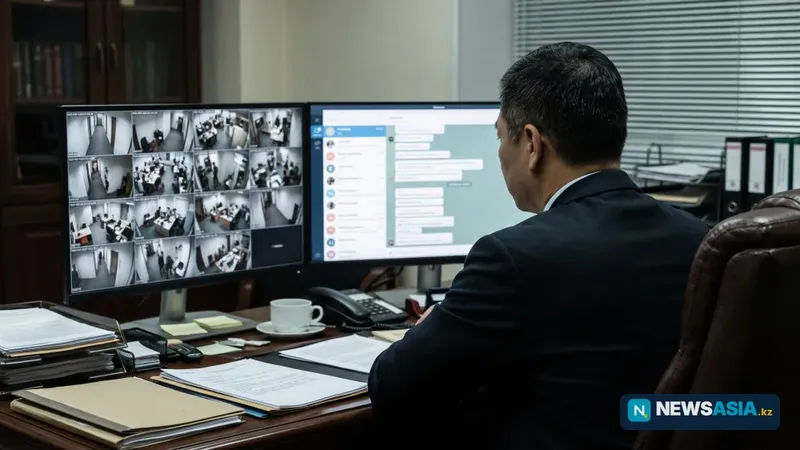
Yernar Zhyngylbayev, an attorney with the Almaty City Bar Association, has clarified the legal framework governing workplace correspondence monitoring and video surveillance, NewsAsia.kz reports, citing Tengrinews.kz.
The expert noted that employers are required to record actual hours worked in accordance with Article 79 of the Labor Code. However, surveillance procedures are restricted by laws protecting personal privacy and personal data. Companies must approve internal regulations on monitoring tools in advance and obtain written acknowledgments from employees confirming they have been notified.
“Monitoring methods — such as video surveillance, tracking corporate email, and checking work history — are recognized as legal only when dictated by operational necessity, such as workplace safety, protection of commercial secrets, or disciplinary oversight, and governed by internal policies,” Zhyngylbayev said.
According to the lawyer, a clear line must also be drawn between corporate and personal communication channels. Work-related messengers and corporate email may be monitored under internal regulations, whereas personal accounts and personal devices remain off-limits. Inspecting them without an individual's voluntary consent is explicitly prohibited by law, as privacy of correspondence is guaranteed by the Constitution.
Specific restrictions also apply to installing surveillance cameras on employer premises.
“Installing cameras in areas designated for personal needs — restrooms, changing rooms, rest zones, and dining areas — is completely unacceptable,” the lawyer said.
Video recordings may be used as evidence under Article 65 of the Civil Procedure Code, but any materials used to enforce disciplinary action must be obtained strictly through legal means. If their rights are violated, workers can demand that the collection of personal data stop under Article 24 of the Law on Personal Data and Its Protection, or file complaints with the Information Security Committee or the labor inspectorate, which previously reminded employers that monetary fines are illegal as disciplinary penalties.


Comments
No comments yet. Be the first.