Holidaying in Burabay: From Beach Regulations to the Rhythm of Wildlife
Conservation specialists at the Burabay National Nature Park have explained five common tourist misconceptions and the rationale behind nature protection rules.

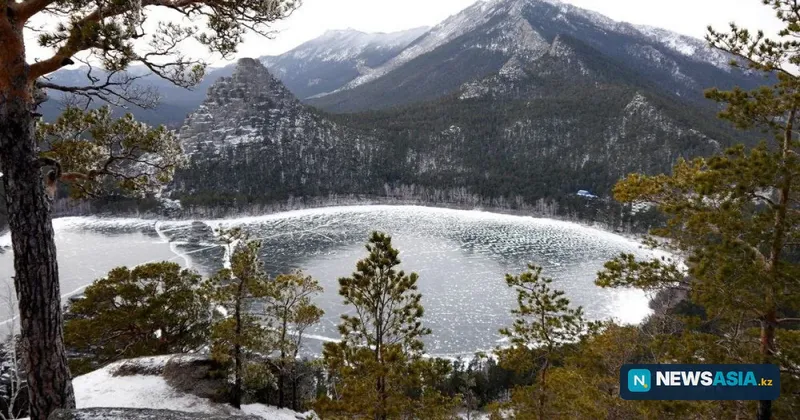
Conservation specialists at the Burabay State National Nature Park have explained five major misconceptions among travelers and clarified the rationale behind park regulations. Read the NewsAsia.kz review to learn how the resort area operates and why visitor requirements are unique, NewsAsia.kz reports, citing news agencies Turkystan.kz and Kazinform.
The rationale behind rules: How the protected area is safeguarded
Many view Burabay merely as a place for leisure and recreation. However, the region's dense forests, clear lakes, and mountain ranges constitute a specially protected natural area governed by specific legislative regulations. Certain rules raise questions among tourists, and misunderstandings often lead to various false impressions. In light of this, national park representatives provided concrete examples showing how even simple everyday human habits can harm the natural environment.
Entrance tickets and four functional zones
There is a widespread misconception among visitors that "paying the entrance fee allows one to roam and relax anywhere freely." Specialists explained that paying an entry fee does not exempt visitors from the obligation to comply with environmental laws and regulations.
National parks in Kazakhstan are divided into four main functional zones: strict reserve regime, ecological stabilization, tourism and recreational activities, and limited economic activity. Each of these sectors has its own designated rules for use and conservation. Such strict limitations are necessary to protect the natural habitats of wildlife, rare plant habitats, and ecological complexes highly sensitive to human impact from degradation.
Beach infrastructure and the aquatic ecosystem
The second misconception is linked to demands that the national park should turn all lake shores entirely into beaches. Park specialists noted that a shoreline is not merely a place for sunbathing or fishing; it is a vital component of a complex aquatic ecosystem.
Various insects and amphibians inhabit these areas, waterfowl nest here, and aquatic vegetation provides indispensable shelter and protection for fish fry and other organisms. In addition, plant roots prevent lake shores from eroding. Therefore, beach areas are organized exclusively in designated locations in accordance with the approved master plan, permissible recreational capacity, and functional zoning.
Feeding forest squirrels: Care or danger?
The next common misconception stems from the belief that feeding wild animals, including squirrels, is an act of kindness. However, experts warned that this practice causes significant harm to the animals themselves.
Squirrels and other wild animals are adapted solely to natural food. Salted nuts, sweets, and table leftovers offered by humans are completely unsuitable for their digestive systems. Regular feeding alters animal behavior, drawing them too close to people and roadways and exposing them to danger. Scientific biotechnical measures carried out by national park specialists should not be confused with unsupervised feeding. According to the rules, unauthorized feeding of wildlife is prohibited, and animals should only be observed from a distance.
Organic waste and decomposing litter
Some travelers believe that food waste, such as fruit peels and bread, decomposes quickly on its own in the forest and can therefore be left behind. However, the natural decomposition of waste does not mean it is safe for the forest.
Discarded food scraps attract predators and other animals to recreational areas, disrupting their natural feeding patterns. In addition, the speed of decomposition depends directly on the weather: in winter and during cold periods, decomposition slows down dramatically. Therefore, all organic waste must also be bagged and taken away.
Dead wood and forest maintenance
The fifth misconception is regarding fallen trees and dead trunks in the forest as a sign of poor maintenance. In reality, fallen deadwood is an integral core of a natural ecosystem.
Old stumps and decaying timber provide shelter for thousands of insects, host microorganisms and fungi, and enrich the soil with nutrients as the wood breaks down. According to specialists, a national park should not resemble a manicured city park, as its pristine natural state is itself of ecological value. Forestry specialists evaluate sanitary measures and fire risks based on the specific conditions of each site and take appropriate decisions.
As the Burabay conservation regulations demonstrate, the culture of recreation has many dimensions. While some may see these measures merely as strict restrictions, for others they guarantee the balance between nature and humans and ensure the preservation of unique natural heritage.


Comments
No comments yet. Be the first.