Child Health, Parental Doubts and System Flaws: An Astana Mother's Frank Account
When Astana resident Aigerim decided to temporarily delay vaccinating her child, believing it would protect him from illness, she did not expect the opposite outcome: her three-year-old son was hospitalized with measles, NewsAsia.kz reports, citing Aikyn.kz.

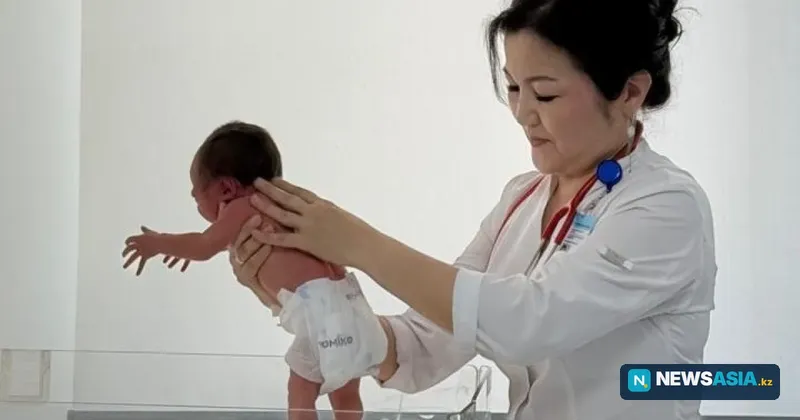
When Astana resident Aigerim temporarily held off on vaccinating her child, believing his natural immunity would grow stronger, she never expected the decision would lead to a severe ordeal: her son, who was turning three, contracted measles, deteriorated, and was hospitalized, NewsAsia.kz reports, citing Aikyn.kz.
Today, young parents' attitudes toward vaccination spark widespread debate in society. Both specialists and the public are discussing the issue thoroughly. In interviews with journalists, mothers themselves and experienced physicians spoke candidly about what lies behind vaccine refusal and what consequences it brings.
"I Thought He Should Grow Up and Get Stronger First"
Capital resident Aigerim Nurzhan, 29, is a medical worker at an outpatient clinic. Despite being a doctor, she does not hide that she was in no hurry to vaccinate her own child. Her son, Alan, turns three this year, but had not received a single vaccine to date. Recently, however, the family faced severe distress: the toddler contracted measles, suffered an unyielding fever, and reached a condition close to intensive care.
"Even though I am a doctor, I did not have my son vaccinated at birth. I thought he should grow up, get stronger, build his immunity, and I would vaccinate him later. But recently he caught measles, his temperature would not go down, and we ended up in the hospital. My child suffered immensely. Thank God, he regained consciousness, his fever dropped, and the rash began to subside. When my mother found out my son had not been vaccinated, she scolded and rebuked me. Who knows, perhaps if he had received the vaccine on time, as she said, he would not have suffered so much. Let him recover first, and then we will consider vaccination," Aigerim said, recalling the past days.
Aigerim's experience is not an isolated case in today's society. For instance, 31-year-old Aizada from Kyzylorda said she has not vaccinated any of her four children since birth.
"My eldest is 10 years old. He has had no vaccinations, starting from BCG. He is currently in the fifth grade. I have not vaccinated my three younger children either. Thankfully, none of them have fallen seriously ill," she said.
However, the mother of four did not fully disclose how she enrolled her children in kindergarten and school without vaccination certificates. According to her, the children attend a private kindergarten and a fee-paying school. Rumors often circulate in society about parents giving gifts to preschool directors to secure admission without documentation. To clarify the situation, journalists contacted heads of several preschool institutions, but were unable to obtain clear answers regarding enrollment rules due to some staff being on leave and others citing health reasons.
"Not All Doctors Are the Same"
Parents who trust vaccines and choose to get them on schedule also have their own arguments and personal experiences. Nazgul Yerzhankyzy, a mother of two, argues that parents must rely on evidence-based medicine. However, she admits that some specialists at state polyclinics act carelessly while chasing administrative targets.
"With my eldest daughter, we did not know much and just followed whatever the doctor said. That was not right either. As the saying goes, 'five fingers are not the same,' and not all doctors are equal. The shortcoming of public polyclinic doctors, in particular, is that they aim to fulfill their quotas for the sake of statistics, failing to provide proper information to parents or show genuine care for the child. Once, a doctor noticed a rash on one of my children, prescribed an ointment, and administered a vaccine just two or three days later as soon as it cleared. The next day, my child developed a fever, the cleared rash returned, and the condition worsened further. Therefore, my message to every parent is: do not rush into vaccination. If a child is restless, suffers from allergies, or has wheezing in the chest, determine the cause. In general, a child must be prepared before being vaccinated. I do not mean to cast blame on everyone, as there are many dedicated and highly responsible doctors," Nazgul explained.
For this reason, she had her second child examined carefully and vaccinated only with medical clearance. In her view, every vaccine has its proper timing and should not be administered too early or too late.
"I Am Not an Anti-Vaxxer, but Distrust Exists"
Sometimes parents' doubts about the medical system deepen after encountering clear documentation irregularities. A woman named Aiganym had her baby receive only maternity hospital vaccinations and skipped subsequent ones. Over time, however, she was shocked to discover records in the medical database for vaccines her child had never received.
"When my child was two and a half and we prepared for kindergarten, I went to get measles and pneumococcal vaccines. The nurse insisted, saying, 'It is a very light vaccine, take it without tests. We will administer the polio drop into the mouth immediately.' Even though I am not a doctor, I read up on things. You cannot administer OPV orally without DTP; shouldn't it be given alongside DTP? So I went into the vaccination room, checked and photographed the expiration dates of the vaccines, and decided to vaccinate only after running tests," Aiganym recalled.
Six months later, when the mother opened the vaccination passport on the eGov portal, she was stunned to see an entry stating that OPV had been administered. She visited the clinic to file a complaint, only to find that the former nurse had gone on maternity leave. "I am not an anti-vaxxer myself, but I started wondering whether it is the healthcare workers themselves who create this distrust?" she said, frustrated by flaws in the system.
Social Media and the Line of Fear
Psychologist and physician Akbayan Toregaliyeva explained how online information plays into parents' internal fears. According to her, the human mind responds much faster to individual tears and emotional distress than to dry statistics.
"This is because we remember stories, not numbers. Thousands of children get vaccinated without any issues, but no one posts videos about that. Yet one mother's tearful story spreads to thousands of people in a single day. Parents who watch such a video fear, 'The same will happen to my child.' Furthermore, if a child coincidentally falls ill after vaccination, it is immediately blamed on the shot. In reality, no one verifies whether the vaccine was truly responsible or not," Akbayan Toregaliyeva said.
The specialist cautioned against making decisions based on viral online videos and urged parents to always consult professionals. Roza Makanova, head of the neonatal physiology department at Multidisciplinary City Hospital No. 2 in Astana, warned that the problem is not limited to social media alone.
"Yes, many are swayed by opinions of anti-vaccine activists on social media platforms like Instagram, TikTok, Threads, Telegram, and Facebook, showing distrust toward conventional medicine and state programs. But that is not the main reason," the doctor said.
While mothers concerned about their children's future grapple between recovery and doubt, specialists stress the importance of taking health seriously and making every decision prudently.

Comments
No comments yet. Be the first.