Housing Transactions in Astana Drop 41.6% in October 2026
A slump in buying activity in the capital is driving demand into the rental market and boosting private housing construction in Kazakhstan's regions, construction expert Dilyara Seitnurova said, NewsAsia.kz reports, citing 24.kz.

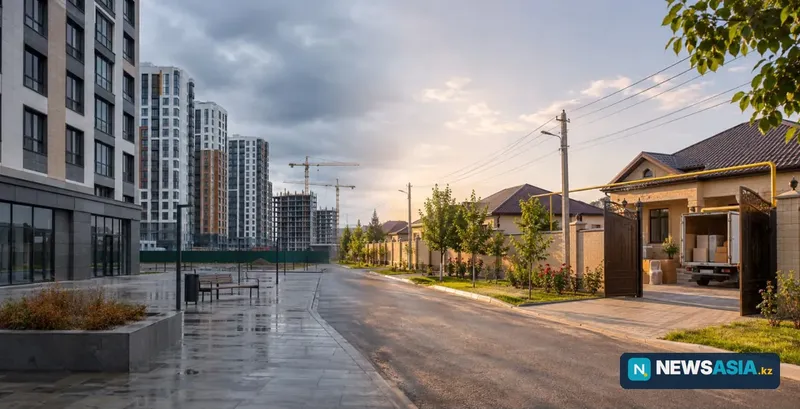
A decline in purchasing activity on the capital's real estate market has been accompanied by a shift in demand to the rental sector and growing interest in private housing construction in the country's southern regions, Qazaq Expert Club construction industry expert Dilyara Seitnurova said, business information center NewsAsia.kz reports, citing the 24.kz TV channel.
Astana has recorded a decline in purchase and sale transactions for the third consecutive month. In August, the year-on-year drop stood at 32.3%, followed by 29.2% in September (down to 6,119 contracts), and reached 41.6% in October, when 5,223 deals were closed. At the same time, 5,130 of the October transactions involved apartment blocks. Meanwhile, in the Turkistan region, the number of transactions increased by 24.7% year-on-year in September and by 4.9% in October, reaching 1,116 units. About two-thirds of them (728 contracts) were in the private housing sector, while apartments accounted for only 388 transactions. The Kyzylorda region showed the most significant growth in October—up 52.6% year-on-year with 853 transactions, half of which also fell on private housing.
According to the expert, regional growth is driven by a low baseline and population distribution patterns: Bureau of National Statistics data shows that 74.5% of Turkistan region residents live in rural areas, where the market focuses on private construction and relies less on mortgage products. The downturn in the capital was also affected by a high baseline in the autumn of 2025, when citizens accelerated purchases ahead of the VAT increase from 12% to 16% in January 2026, pushing the nationwide figure in October 2025 to 41,000 transactions.
Seitnurova noted that net migration to Astana totaled about 52,000 people in January–September 2026, while the Turkistan region lost 27,902 residents to migration alongside a natural increase of 21,406 people. Amid high housing and loan costs, capital city demand has temporarily shifted to rentals, which rose 20.1% over the year. In the first nine months of 2026, 3.05 million square meters of housing were commissioned in the capital (+3.4% year-on-year), or 1.79 square meters per resident, compared to 922,000 square meters (+7.9%), or 0.43 square meters per person, in the Turkistan region.
The analyst added that large-scale development in the south is constrained by profit margins. In Turkistan, primary market prices rose 19.4% to 421,478 tenge per square meter, while secondary market prices grew 5.5%. Average actual construction costs per square meter in the capital stand at 303,200 tenge, whereas sales prices in Turkistan are 44% lower despite comparable building material costs, higher utility connection expenses, and competition from social housing.

Comments
No comments yet. Be the first.