EDB provides 28.5 billion tenge for wind power plant in Karaganda region
A 150 MW wind farm built with an investment of 28.5 billion tenge has been launched in Karaganda region, capable of covering up to half of Karaganda's electricity needs.

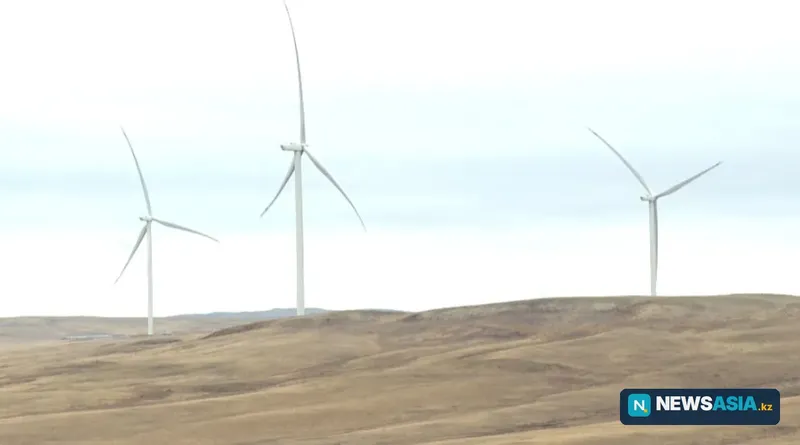
This year, 28.5 billion tenge in long-term financing was allocated to launch the new Hyperborea wind power plant in Karaganda region, project participants announced during the official commissioning of the energy facility, business information center NewsAsia.kz reports, citing 24.kz.
The funding was provided by the Eurasian Development Bank. The project in Osakarovka district was implemented in phases over three years: a 50-megawatt start-up complex was commissioned in early 2025, and the remaining 100 megawatts were connected this year. Generated electricity is fed into Kazakhstan's national power grid through the plant's own substation and KEGOC transmission lines.
According to Sultan Dukenbayev, head of the Renewable Energy Development Department at the Ministry of Energy of the Republic of Kazakhstan, renewable power generation shows an average annual growth of 10–15%. Over the first 10 months of this year, renewable energy plants generated a combined 8.6 billion kilowatt-hours, exceeding 8.5% of total domestic power production. The site for the wind farm was selected based on multi-year climate observations that confirmed stable wind flows.
The facility features 21 automated wind turbines with a capacity of 7.7 megawatts each. The total height of each turbine including the blade exceeds 210 meters, with a blade length of about 97 meters. Installing a single tower required 1,100 cubic meters of concrete foundation weighing around 2,750 tons. Thirty kilometers of access roads were built on the premises, and operations are run from a single dispatch center.
Dmitry Zaitsev, general director of Hyperborea LLP, said planned average annual output will exceed 600 million kilowatt-hours, equivalent to 40–50% of Karaganda's needs or the power consumption of ten Osakarovka districts. Commissioning the facility will reduce carbon emissions by 500,000 tons annually and has created 20 jobs.

Comments
No comments yet. Be the first.