Urban Overheating, Heat Islands, and Three Trees per Window: How Astana Plans to Go Green
Elnar Bazyken, head of the Astana Urbanism Center, spoke at an architecture forum about satellite research into urban overheating and the rollout of new greening standards.

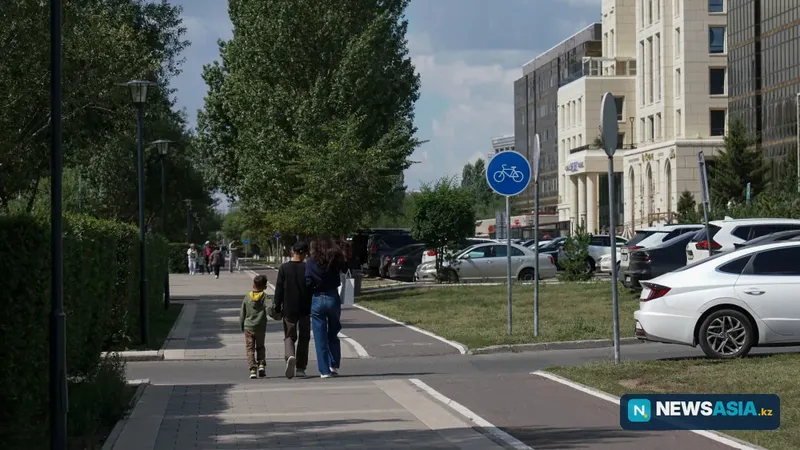
Elnar Bazyken, head of the Astana Urbanism Center, explained at the SHARE Kazakhstan international forum on architecture and urban development in Almaty how the capital intends to protect against overheating and wind through strategic planting, NewsAsia.kz reports, citing Tengrinews.kz.
Experts attribute the need for a fundamental overhaul of planting approaches to the capital's rapid expansion. While the initial priority was building an administrative center, the main focus now is creating a comfortable living environment. Demographic forecasts predict the city's population will reach around 2.3 million people by 2035. At the same time, infrastructure must be developed under severe climatic conditions: the capital has an extreme continental climate with freezing winters, scorching summers, and high winds.
"Greening for us is not merely a matter of aesthetics, but a tool for climate adaptation. We are gradually moving from decorative landscaping to a full-fledged green infrastructure capable of improving the microclimate and enhancing quality of life. We aim to transition from purely visual and aesthetic design criteria to solutions based on objective scientific research data," Elnar Bazyken said.
In particular, the city has begun studying the urban heat island effect—areas with elevated temperatures compared to less developed zones. Despite freezing winters, some districts of the capital experience significant overheating during the summer. Experts are using satellite data to identify these areas and analyze the causes of these anomalies.
"The results of this research will be taken into account when planning greening initiatives, designing public spaces, and choosing urban paving materials," Elnar Bazyken explained.
Forum participants also addressed the capital's "three trees from every window" standard. The speaker detailed how this concept is being applied in practice.
"A green charter has been adopted in Astana, and we are implementing it. There are certain challenges given Astana's extreme continental climate. Nevertheless, we are setting this benchmark so that at least three trees are visible from every apartment window. The idea is to direct greater attention toward greening urban spaces: providing shade, reducing wind, and improving the climate," Elnar Bazyken explained.
The requirement ensuring three trees are visible from apartment windows is also enshrined in the city's design code. In addition, regulations require developers to allocate at least 30 percent of residential complex areas to green spaces and mandate planting one tree for every five parking spaces, along with hedgerows.


Comments
No comments yet. Be the first.