Cryobank for Rare Animals and Snow Leopard Cloning Tested in Kazakhstan
Kazakhstan has launched a project to establish a cryobank for rare animal species and carried out initial experiments on interspecies cloning of the snow leopard, NewsAsia.kz reports, citing Zakon.kz.
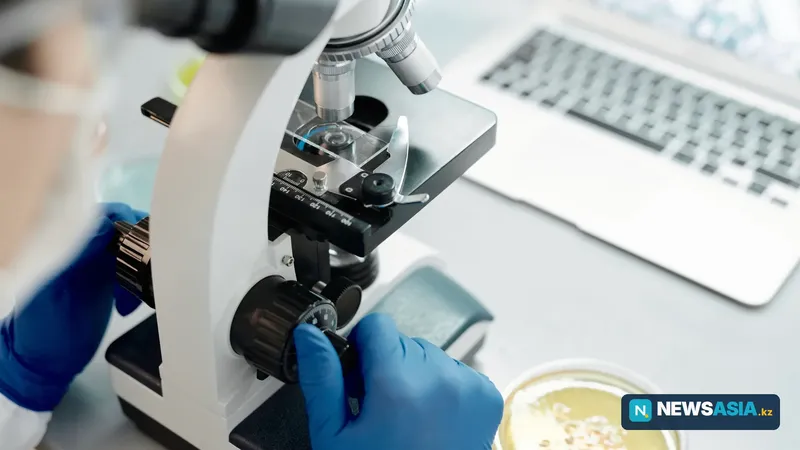
In Kazakhstan, specialists from several scientific organizations and international teams have launched a project to establish a cryobank for rare animal species and conducted the first experiments on interspecies cloning of the snow leopard, NewsAsia.kz reports, citing Zakon.kz.
The study was conducted by staff from the Institute of Zoology, the Science Committee of the Ministry of Science and Higher Education of the Republic of Kazakhstan, the Wildlife Without Borders foundation, the Laboratory of Embryo Technologies, and IUCN experts from Switzerland. Detailed findings were published in the scientific journal Biology. The scientists evaluated the viability of biological material from 272 individuals representing 19 mammalian species and subspecies. Tissues were sampled from ear skin: 17 species were collected in the wild in Kazakhstan, while samples of the sika deer and Amur leopard were provided by the Almaty Zoo. The list included Red Book-listed saiga, kulan, snow leopard, Turkestan lynx, Bukhara deer, Pallas's cat, and Indian crested porcupine.
Following slow programmable freezing and subsequent thawing, the average cell survival rate dropped significantly — from approximately 83% to 48%. Rodent tissues were found to withstand the cold best, while ungulate and porcupine cells were the most severely affected.
“Following programmable freezing using 1.5 M DMSO, fibroblast viability was 34.2–58.9% (average 48.0 ± 1.6%) compared to 67.5–97.6% before freezing. Cells of small rodents tolerated freezing best, while cells of the Indian crested porcupine, deer, kulan, and saiga performed worst. Pre-freezing viability did not predict post-thaw viability. Frozen and thawed fibroblasts from all 19 species proliferated in culture... Thus, biobank-stored cells remain suitable for cultivation, although freezing slows their growth,” the authors of the scientific paper explained.
In parallel, biologists tested the feasibility of using thawed snow leopard tissues for interspecies cloning. Cells from a single male snow leopard were transferred into egg cells from 14 domestic cats, obtained after routine spaying at a veterinary clinic in Almaty. Out of 33 reconstructed embryos, 10 developed to the morula stage (an early embryonic phase of 16–32 cells). The researchers emphasized that there is no question of a live snow leopard being born yet; this is merely an intermediate laboratory stage.
“Cryopreserved snow leopard fibroblasts attached and proliferated after thawing and could be used to reconstruct embryos with domestic cat cytoplasts... ... Without activation-only controls and intraspecies controls, as well as confirmation of embryonic nuclear origin, these results remain preliminary,” the researchers specified.
In subsequent phases, the study's authors intend to improve fusion and activation rates, as well as advance embryo development to the blastocyst stage (days 5–6 after fertilization). Globally, similar techniques have already yielded results: transferring the nuclei of wild felids into domestic cat oocytes previously allowed the cloning of African wildcat kittens. The developing cryobank will serve as a foundation for preserving the genetic pool of Kazakhstan's endangered animals and restoring their populations in the future.

Comments
No comments yet. Be the first.