Astana Pediatric Cardiac ICU Nurse Shares Candid Story of Saving Children's Hearts
When Darkhan Zhantore submitted his resume to a clinic in the capital in August 2021, he had no idea the decision would define his calling, NewsAsia.kz reports, citing Zakon.kz.

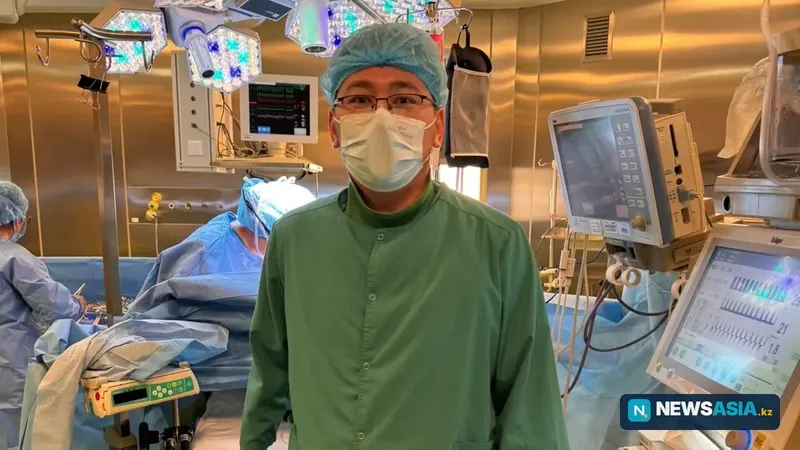
When Darkhan Zhantore, a native of the Turkistan Region, sent his resume to a clinic in the capital in August 2021, he had no idea the step would tie his fate to saving the most fragile lives: the very next day, the young specialist was invited for an internship, NewsAsia.kz reports, citing Zakon.kz.
Today, the 27-year-old specialist from the village of Zhenis in the Ordabasy District of the Turkistan Region dedicates himself to saving babies. He has worked in the pediatric cardiac intensive care unit for five years. Zhantore began at the height of the coronavirus pandemic's decline as a ward nurse and later, after gaining valuable practical experience, transitioned to the role of a nurse anesthetist.
«It Feels Like I Cannot Handle This»
His first steps in the intensive care unit proved to be a serious endurance test for the novice medic. The stress was immense, and the weight of responsibility for the tiny patients weighed heavily on his shoulders.
«During my first days at work, one thought kept spinning in my head: “It feels like I cannot handle this.” But over time, thanks to perseverance, I settled into both the work and the team. I still remember my first patient, a girl named Ayala. You could say she was the star of our department: she stayed for a year, celebrated her birthday there, and only then was discharged home,» Zhantore recalled.
Since then, dozens of young patients with heart defects have passed through the specialist's hands, each requiring continuous observation.
«In Intensive Care, There Is No Difference Between Day and Night»
The specific nature of pediatric cardiac intensive care demands absolute vigilance: staff schedules consist of shifts from 08:00 to 17:00, from 17:00 to 08:00, and include continuous 24-hour duties from morning to morning. Every shift handover turns into a meticulous handover ritual. Medical workers thoroughly examine each child: reviewing the diagnosis, details of the surgery performed, the medication schedule, and care nuances.
Particular attention is paid to the baby's body: the skin condition is checked for any rashes, bruising, diaper rash, or injuries. Staff verify feeding times, test results, monitor readings, X-rays, and the correct placement of drainage tubes, catheters, and probes, after which the room is prepared for new orders from intensive care doctors.
«Day and night shifts essentially follow the same routine. Children cannot be left unattended for a single second; in intensive care, there is no difference between day and night. The babies have heart defects, and their condition can change in an instant, so vigilance plays a huge role,» he explained.
At the same time, the nurse reflected on the psychological side of the profession: compassion must be paired with composure, otherwise burnout is inevitable.
«Children Recover Faster in the Presence of Parents»
The doors of the intensive care unit are usually closed to outsiders, so the medical staff's intense work is rarely in plain sight, and employees hear fewer words of appreciation than colleagues in open wards. Nevertheless, the clinic tries to create conditions for mothers to visit their children.
«We invite mothers every day so they can interact with their children. Sometimes, due to the spread of infections, the unit is quarantined and parents are not allowed in. When you compare these periods, you see: children recover faster in the presence of parents. Babies are sensitive to a warm word and gentle treatment; when you share care and love with them, they feel safe,» the nurse observed.
«We Agreed We Wouldn't Cry»
One of the most emotional moments in Zhantore's practice occurred during a shift with a one-year-old child. The toddler categorically refused to stay with any other staff members and calmed down exclusively in the young man's arms, bursting into tears at any attempt to switch caregivers.
«At night, so he could fall asleep, I lay down next to him and cradled him in my arms. The next morning, when my shift was ending, the baby started crying again and wouldn't go to anyone. I had to carry him into the operating room myself,» Zhantore admitted.
Footage of this shift, accidentally filmed by colleagues, went viral on social media. In the video, the nurse quietly soothed his little charge: “Baby, don't cry, you have to be strong. We agreed we wouldn't cry. We'll get better soon and go to mom, your mom is waiting for you.” The child listened to these words, gradually calming down...
Turning to families undergoing severe trials in hospital wards, the healthcare specialist urged them never to lose hope.
«Hold on, never break. Not all illnesses are treated with medication alone; healing can also come through a warm word, a kind wish, prayer, love, and care. Every heart deserves life,» Darkhan Zhantore concluded.


Comments
No comments yet. Be the first.