AI, Career Shifts, and 24,000 Applicants: How Free IT Training Works in Astana
More than 24,000 Kazakhstanis have applied for free training in information technology and artificial intelligence in Astana, NewsAsia.kz reports, citing the 24.kz TV channel.

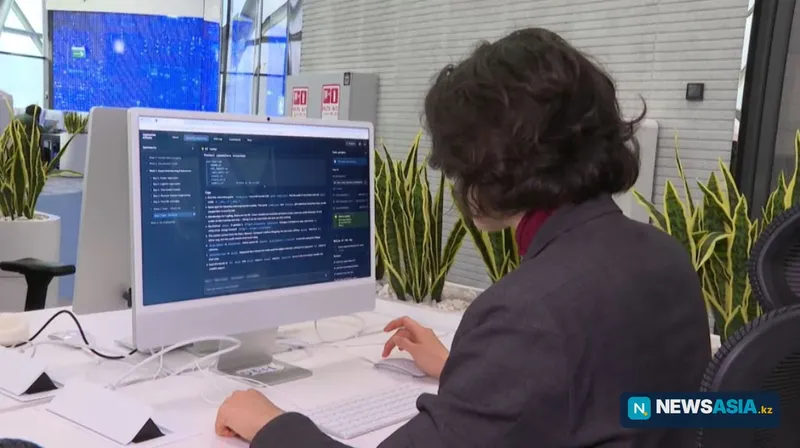
More than 24,000 Kazakhstanis have applied for free courses in IT and artificial intelligence in Astana, NewsAsia.kz reports, citing the 24.kz TV channel. Interest in this unconventional training format continues to grow rapidly.
Over its two years of operation, the capital's Tomorrow School has received more than 24,000 applications from people seeking to enter the digital sphere. Currently, 493 people are enrolled in the project. Meanwhile, about 40 graduates have already completed the educational program, and more than 30 students have completed specialized internships in data analytics, software engineering, and AI. Some students are launching their own startups.
There are no traditional lectures or teachers in the educational process. The training is based on a peer-to-peer methodology, where participants collaborate to solve real-world cases.
Among the students is Leila Uteulieva, who holds a degree in bioengineering. She joined the project a year and a half ago after deciding to switch careers. She is now developing an artificial intelligence model to estimate housing prices based on property characteristics and location.
The student explained in detail how the practical work is structured:
“For each project, we are assigned a specific role. This time, I am acting as a data analyst at an American real estate company. We need to take statistical data on home prices in California, clean and process it, and then train the models.”
She also added that students learn several in-demand tools at the school:
“We learn four programming languages: Go (Golang), JavaScript, Rust, and Python. Right now, I am taking an intensive course in artificial intelligence. Over three months, we study how artificial intelligence works, how to train large language models, and how these technologies function from the inside.”
Mentor Yerasyl Saparbekov highlighted the features and advantages of peer learning:
“When learning programming, this approach is especially relevant because there is a vast amount of information today that is difficult to absorb on your own. The environment helps students in the early stages when they do not yet have knowledge or experience in coding. A smooth transition into a new profession is achieved through the peer-to-peer learning system.”


Comments
No comments yet. Be the first.