A Burden of a Name, School Bullying and a Years-Long Fight for Documents: Aktau Resident's Story
When young Aktau mother Sharshagan Dzhumabayeva sent her daughter to school, she had no idea that a routine questionnaire would end in tears and revive old pain, NewsAsia.kz reports, citing Zakon.kz.

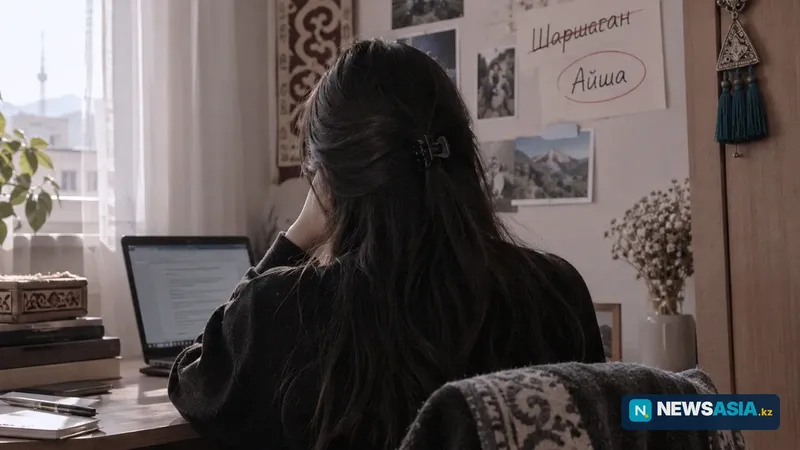
When young Aktau mother Sharshagan Dzhumabayeva sent her eldest daughter to school, she had no idea that a routine questionnaire from a homeroom teacher would reopen childhood trauma and make her suffer over her own name again: the teacher read her passport details out loud in front of the whole class, triggering mockery from peers, NewsAsia.kz reports, citing Zakon.kz.
Today, the 26-year-old Aktau resident, a certified educational psychologist and marketing specialist, is raising three children and is on maternity leave. In a candid interview with Zakon.kz, she spoke in detail about the ordeal of bullying she endured during her school years, why family and acquaintances have long called her Aisha, and why the official name change has dragged on for five years.
«There are six children in our family, and I am the fifth»
She was born in Turkmenistan but moved to Kazakhstan with her family while still an infant and grew up in Aktau. Her birth was accompanied by severe anxiety for her family, and the circumstances of her delivery determined her fate for decades to come.
As she recalled, her mother endured days of excruciating labor while doctors fought for the lives of both the mother and the unborn child:
«There are six children in our family, and I am the fifth. As it turned out, before I was born, my mother suffered through three days of contractions. At the time, obstetricians warned that either I or my mother could die. My grandmother was terribly worried about us. She feared my four sisters would be left without a mother, and she even agreed that doctors should prioritize saving my mother's life. Thank God, everything turned out fine.»
However, that hard-won survival brought an unexpected decision. Seeing how much her daughter-in-law had suffered through three days of endless pain, the newborn's grandmother decided to name the baby girl Sharshagan, which literally translates from Kazakh as "tired." The girl's mother strongly opposed the choice but was unable to sway the elder relative at the time.
«Seeing how exhausted my mother was after those three days, my grandmother named me Sharshagan. But my mother told her it was a meaningless name that meant 'tired.' Back then, however, it was considered normal to give names based on the situation. For example, among people I knew in our village, there was a boy named Noyabr because he was born in the autumn. I also knew a Zhanbyrbay because it was raining heavily when he was born. I heard of the name Amanzhol — when he was born, his father was traveling, and they named him that so he would arrive safely. Everyone knows that if men became fathers at 50, their sons were named Elyubay, if at 60, Alpysbay, and so on.»
«Our family never had a boy»
The expectation of a male heir became a distinct chapter in the family history. In traditional households, boys were always eagerly awaited, and the birth of daughters was often accompanied by hopes for a son to follow soon. Her parents raised six daughters, and each pregnancy carried this unfulfilled hope.
The elder sisters were named Indira (born in 1989) and Kandira (1990). The third girl, born in 1992, was named Ulmeken — a telltale sign that the adults hoped for a son. Then came Saltanat (1997), named by her father, Sharshagan herself (2000), and a younger sister, Madina (2009). The expected male heir was never born into the family.
«My sisters are named Indira (born in 1989), Kandira (1990), Ulmeken (1992) — by the way, because my parents already wanted a boy — Saltanat (1997), named by my father, myself, Sharshagan (2000), and my younger sister Madina (2009). Our family never had a boy. According to Kazakh customs, in such cases daughters were named, for instance, Uldana, Ulbolsyn, and so forth, in the hope that the next child would be a boy. It is not just unfair, but very hurtful. I think a child with such a name ends up heartbroken. You might not realize it in early childhood, but bullying starts from the first years at school,» she said.
«My name brought a lot of suffering; they laughed at me at school»
The realization of what her name meant came during her first years of school. For the young girl, going to class gradually turned into an ordeal. Classmates never missed an opportunity to mock the unusual word in the grade book, while she lacked the inner strength to stand up to the bullies.
Sharshagan admitted that her self-esteem suffered day after day, especially compared to classmates who had melodious and gentle names:
«My name brought a lot of suffering. At school, they laughed at me and asked why I had such a name. They would say things like, 'Your family must be sick of you,' or 'They got tired of you.' Hearing that gave me low self-esteem, and I couldn't stand up for myself, because how do you answer that? My classmates had very pretty names like Asem and Kumisay. When I meet people, everyone is surprised, asks again, and looks puzzled. Sometimes I was angry and asked my grandmother why she named me that, as if she had given birth to me and gotten tired. It could have been done differently. I looked up the statistics, and it turns out there are only eight people with my name, and all of them are elderly. I am the only young one.»
At these words, she paused for a long time. The feeling of alienation over her own name left a lingering mark on her childhood soul, sounding not like a parental blessing, but like a reminder of someone else's exhaustion.
«Before the Almighty I am Aisha now, but on paper I am still Sharshagan»
Her teenage years brought a turning point. Around eighth or ninth grade, Sharshagan fell seriously ill. Worried by their daughter's lingering illness, her family invited a cleric to recite prayers from the Quran. It was the imam who pointed out the meaning and energy carried by the child's name.
«In eighth or ninth grade, I became Aisha. That was because I got very sick. An imam came to recite the Quran. When he found out what my name was, he said: 'How can you give a child a name that carries no good meaning? Sharshagan has a heavy meaning, as if wishing her to be tired her whole life. Her name must be changed.' My parents began to think, and my father suggested Aisha. Most often, the name Aisha refers to Aisha bint Abi Bakr, one of the most prominent women in Islamic history, the wife of Prophet Muhammad and daughter of the righteous caliph Abu Bakr. She was beautiful, intelligent, and just. As required by Kazakh traditions, the imam recited the adhan into my ears and changed my name. Before the Almighty I am Aisha now, but on paper I am still Sharshagan.»
From that day on, her family and new acquaintances called her exclusively Aisha. Life seemed to be settling into harmony, but the legal reality continued to resurface at unexpected moments.
«I have been waiting five years with no answer»
The final decision to change her name in all state registers came when her own family faced the same pain. The story repeated itself within the walls of the school attended by her eldest daughter.
During a lesson, a teacher asked pupils for their parents' names. The girl proudly said her father's name was Nurlan and her mother's was Aisha. However, the teacher pointed out the discrepancy with official records in front of the entire class, emphasizing that the mother was listed as Sharshagan on paper. The class burst into laughter, and the child returned home in tears, prompting the mother to take decisive action.
«My children go to school. A teacher asked my eldest daughter for her parents' names, and she answered that her dad's name was Nurlan and her mom's was Aisha. But the teacher said in front of the whole class: 'Your mother's name in the documents is Sharshagan.' My daughter was deeply upset, came home unhappy, and said everyone laughed at it. That was when I decided to change my documents so my children wouldn't have to blush because of my name. I contacted the Embassy of Turkmenistan because I was born there. In my application, I requested a new birth certificate to replace the name Sharshagan with Aisha. I have gone there so many times, but I have been waiting five years with no answer. They say that country has strict laws, but I would really love for a miracle to happen. If I had been born in Kazakhstan, everything would have been much simpler. They say you can change a name in a week and a half. But alas.»
Her place of birth became the obstacle to obtaining a new passport. Because her birth record remains in the archives of a neighboring country, the procedure has dragged on for five long years of regular visits and inquiries to consular services.
Today, most people around her know the Aktau resident as Aisha, and only those who have not seen her since school occasionally address her by her old name out of habit. Her main dream is simple: to finally receive an updated birth certificate, print it out large, share the joyful news on social media, update the rest of her documents, and leave the name Sharshagan in the past for good.
Facts on names and statistics
While looking into the history of her rare name, she uncovered interesting statistics and noted traditional naming customs:
- 8 people: the number of women named Sharshagan that she found in records, with all others being elderly women.
- Naming based on events: the practice of naming children after weather conditions (Zhanbyrbay), seasons (Noyabr), travel (Amanzhol), or a father's age (Elyubay, Alpysbay) was widespread in everyday life.
- Changing a name in Kazakhstan: according to her, the legal process of updating documents takes about a week and a half for citizens born in Kazakhstan, whereas going through diplomatic channels of other countries can take years.
Comments
No comments yet. Be the first.