Chronicle of Aulie-Ata: From Jasorken village to the legacy of Tolegen Tazhibayev and Abai
The history and generational continuity of the ancient Aulie-Ata region have been recounted in the memoir "Echoes of Yesterday and Creation of Today", NewsAsia.kz reports, citing Aikyn.kz.
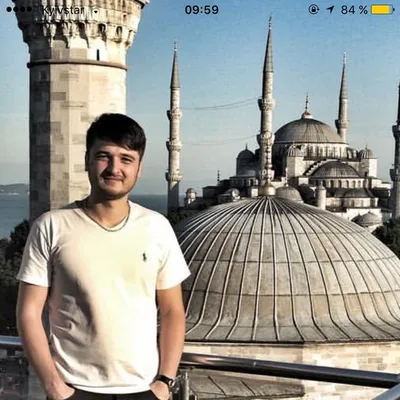
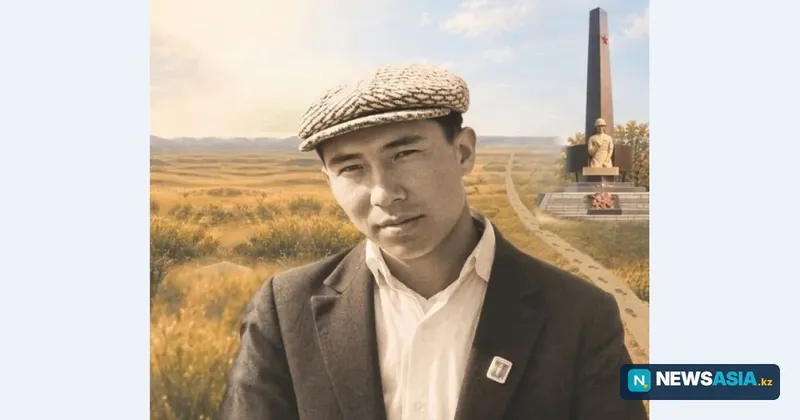
A memoir dedicated to the ancient Aulie-Ata region and the past of Kazakh history has been published, detailing the area's chronicle and modern constructive values, NewsAsia.kz reports, citing Aikyn.kz.
How it began: history and the secret behind the name
Located at the junction of the Talas River and the Karatau Mountains, the village of Jasorken is known as an ancient Turkic settlement. The name of the village has its own history: it was once proposed by Tolegen Tazhibayev, a prominent scholar, Doctor of Pedagogical Sciences, academician, and former rector of Al-Farabi Kazakh National University. The primary wish was for the rising generation to grow and prosper.
In addition, the famous Battle of Atlakh (Talas), which was of great importance in world history, took place in this area in 751. In this battle, the ancestors defeated the Chinese army, determining the settlement direction of the ancient Turks and modern Kazakhs in the region. Ancient petroglyphs at the foot of the Tian Shan mountains also confirm the significance of this valley, which is favorable for farming and livestock breeding.
Family chronicle and fostering a work ethic
The article presents facts drawn from family history and maternal memoirs. The lineage traces back to Zhantai near Kulan, whose son Beibit, following his father's advice in search of water-rich land, led 12 households to relocate to the sunny side of Degerez, near present-day Jasorken. The author particularly recalls the hardships of postwar childhood and the hard work of his parents.
"The example and perseverance of my father Yeshenkul, who returned wounded from the war with victory, the life of my mother Aibubi, who carried the burden of the family, and the overall fate of the people at that time made us grow up," he writes.
The author calls brotherhood and diligence in the nation's history the key qualities to be instilled in the youth of an independent country. He also warns that while knowing history and genealogy is important, one must avoid clan division and feeling superior to others.
Pursuit of knowledge and the native tongue
Striving for education from childhood and guided by Abai's principle of "eagerness to know," the author graduated from an agricultural technical college in Zhambyl and later from the Agricultural Institute in Almaty. He reminisces with nostalgia about the sincere friendship of youth in the 1960s and the streets of Almaty filled with fruit trees.
While great hope is placed on young people studying abroad today, preserving the national identity has not been overlooked. However, only time will tell how the patriotism and devotion to the native language among foreign-educated youth will manifest in real life.
"Language is not just words used in daily conversation; language represents the multifaceted historical memory of that people, the nation's traditions and character, and the very phenomenon that makes a nation a nation. Therefore, I hope the youth understand the value of our language, which our wise people called the 'Mother tongue'," the author concludes.
This historical reflection highlighted how important memories of the past and today's lessons are. For some, it is simply the history of a village and a family memoir, while for others, it has become a new perspective on understanding historical memory and the value of their native language.

Comments
No comments yet. Be the first.